The Maasai are one of the world's most iconic indigenous communities, with a population of approximately 2 million across Kenya and Tanzania. They are semi-nomadic pastoralists who have herded cattle across the East African savanna for centuries, counting their wealth in livestock and children.
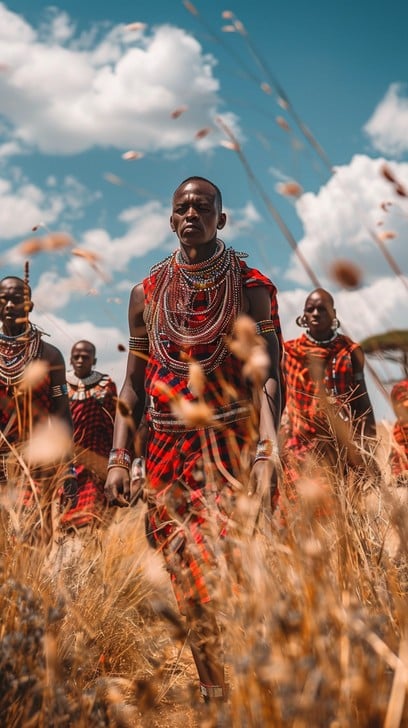
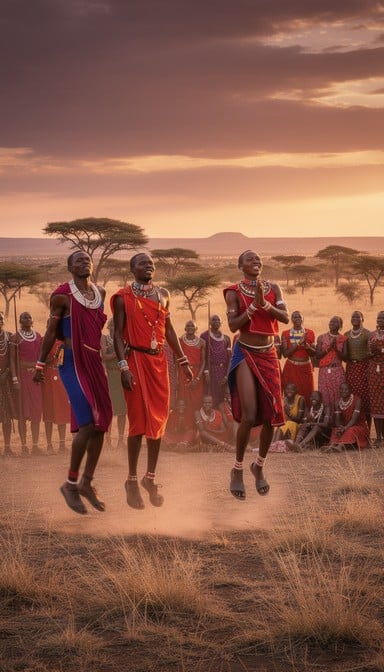
Known for their distinctive red shukas (traditional cloths), intricate beadwork, and the legendary Adumu (jumping dance), the Maasai have preserved their traditions while adapting to a changing world. Their deep spiritual connection to the land and cattle — believed to have been given to them by the god Enkai — shapes every aspect of their daily life.
Maasai homesteads, called bomas, consist of a circular thorn-bush fence (enkang) enclosing 4-8 families. Huts (manyatta) are built by women from sticks, mud, and cow dung — naturally cool in summer and warm at night.
Cattle are the heart of Maasai life. They provide milk, meat, and blood (mixed in ceremonies). A man's wealth is measured by his herd size, and cattle are used as dowry, gifts, and offerings to Enkai (God).
Maasai beadwork is a language of its own. Colors convey meaning: red for bravery, blue for energy, green for land, yellow for hospitality. Each necklace and bracelet tells a story of age, status, and clan.
Maasai society is organized by age-sets: children become warriors (moran), then junior elders, then senior elders. Each stage has distinct responsibilities, from protecting the herd to leading community ceremonies.
The famous Maasai jumping dance (Adumu) is performed by warriors in a circle. Young men leap vertically, never letting heels touch the ground, demonstrating strength and stamina. It is central to Eunoto (warrior graduation).
Maasai culture emphasizes harambee (pulling together). Decisions are made collectively by elders. Sharing is obligatory — a visitor is always offered milk or water, and meat is distributed equally among all.
Walk through a traditional Maasai homestead. See how huts are constructed, meet the families, and learn about daily life — from cooking to childcare to cattle management.
Watch warriors perform the famous jumping dance. Feel the rhythm of their songs and chants, and join the circle if you're brave enough to try leaping like a Maasai moran.
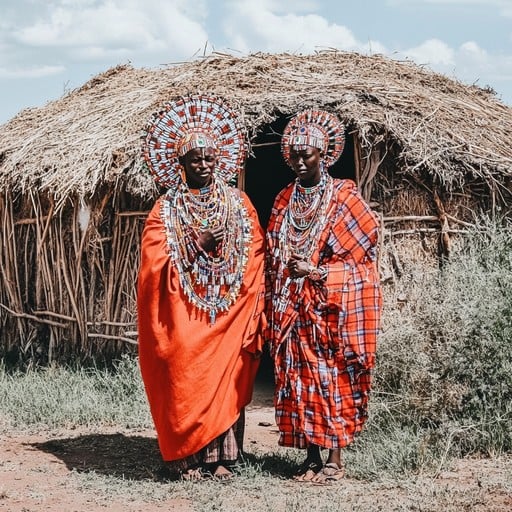
Sit with Maasai women and learn the art of beadwork. Create your own bracelet or necklace while discovering how colors and patterns communicate age, marital status, and clan identity.
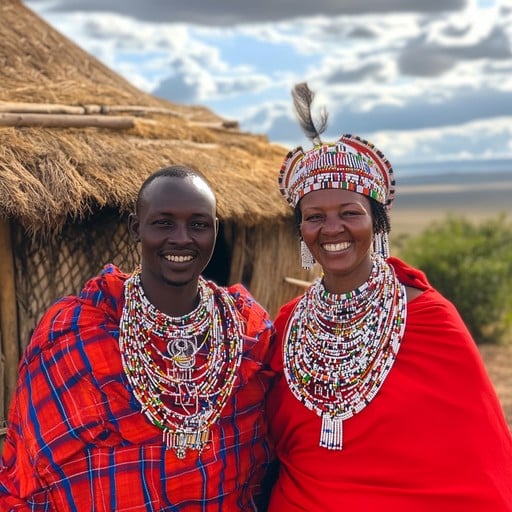
Share a meal with your hosts. Sample nyama choma (roasted meat), ugali (maize porridge), and mursik (fermented milk). Learn how food is prepared over open fires using traditional methods.
Accompanied by Maasai warriors, walk through the savanna identifying tracks, medicinal plants, and bird calls. Learn how warriors protect livestock from predators using only spears and ingenuity.
Ask questions, share stories, and learn about Maasai cosmology, the role of elders, coming-of-age ceremonies, and how the community is navigating the balance between tradition and modernity.
Join us for an authentic Maasai village experience. Our visits are arranged in collaboration with community leaders to ensure ethical, consensual, and respectful cultural exchange. Every booking directly supports the community.